Quiet, Precise, and Everywhere: The Craft Lager Takeover Nobody Saw Coming
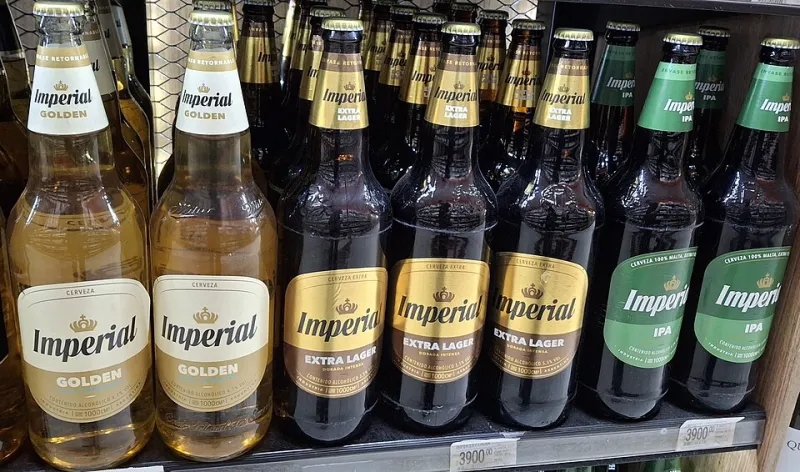
Photo: Just a Man, CC BY 4.0, via Wikimedia Commons
The Best Ninja Is the One You Never Notice
A hazy IPA announces itself. It's cloudy, aromatic, unmissable — the beer equivalent of a smoke bomb. A great craft lager does the opposite. It slips in clean, hits exactly where it should, and vanishes without leaving a bruise. For years, that subtlety got lager mistaken for boring. Turns out, it was just discipline.
Walk into almost any serious US brewery right now and you'll find it: a side-pull tap, a minimalist label, a pilsner or helles or Mexican-style lager that the bartender recommends with a knowing nod. Craft lager isn't having a moment. It's having a movement — and it happened while everyone was staring at the IPA shelf.
How Lager Got Typecast
Let's be honest about why craft lager spent years in the penalty box. For American drinkers, "lager" meant the yellow fizzy stuff — the beer of tailgates, gas stations, and your uncle's cooler. Craft brewers, trying to prove beer could taste like something, swung hard toward hops and barrel aging. Flavor was the message, and big, loud beers delivered it.
Lager, meanwhile, demanded the one thing a scrappy startup brewery rarely had: time and temperature control. Cold fermentation. Weeks of lagering. Zero somewhere-to-hide. As one brewer we spoke with at a Colorado taproom put it: "An IPA lets you cover your mistakes. A lager reads your diary out loud."
So for a decade, lager was the style craft beer loved to dunk on — even as the equipment gap quietly closed.
The Turn: When Small Breweries Got Cold
The renaissance started when two things converged. First, glycol-jacketed unitanks and precise temperature control became affordable enough for a five-barrel system in a strip mall. Suddenly, a small brewery in Minneapolis or Asheville could lager properly without a cave in Bavaria.
Second, drinkers got curious. After the haze craze and the pastry-stout arms race, a chunk of the craft audience started craving something they could drink two of. Sessionability stopped being a dirty word. The market was ripe for a beer that was interesting and crushable — and modern craft lager is exactly that tightrope.
The results speak for themselves. Kettle-soured Mexican lagers with lime. Italian pilsners dry-hopped with Saaz for a floral snap. Kellerbier poured unfiltered from the tank. These aren't throwbacks; they're arguments that precision is its own kind of flavor.
What Brewers Actually Say
We asked a few folks behind the tanks what changed. The answers clustered around one theme: lager is the final exam.
"You can't fake clean fermentation," said one brewer at a lager-focused startup in Ohio. "Every ester, every sulfur note, every diacetyl flicker is right there. When our pilsner pours perfect, that's the hardest beer we make."
Another, at a Texas brewery that shifted its flagship from IPA to a helles, told us the move felt "like a betrayal" at first — until the helles outsold the IPA within a year. "People weren't tired of flavor," she said. "They were tired of fatigue."
That's the thesis of the whole movement: craft lager isn't a retreat from flavor. It's flavor with the volume turned from eleven to a very confident seven.
Brew Like a Ninja: Lager Lessons for the Homebrewer
Want to brew in the spirit of the renaissance? Steal these techniques from the pros:
Ferment cold, ferment patient. Pitch a clean lager yeast at 48–52°F and resist the urge to rush it. The classic trick is a fast primary followed by an extended cold lagering period — three to six weeks near freezing lets yeast clean up every off-flavor they created.
Water is the recipe. Lager shows off water chemistry like nothing else. Sulfate-to-chloride ratio matters; a chloride-forward profile rounds out malt, while too much sulfate makes a pilsner snappy to the point of harsh. Get a water report. Adjust. Taste.
Decoction is optional, respect is not. You don't need a 19th-century Bavarian decoction mash to brew great lager, but you do need fresh malt, a vigorous boil, and rigorous sanitation. In a beer this transparent, process is the recipe.
Use the hell out of hops — just the right ones. A dry charge of Saaz, Hallertau, or Tettnang at flameout gives aroma without bitterness. Restraint, again, is the skill.
The Conversion Six: Lagers for Hopheads
Know a self-declared "IPA only" friend? Deploy this shortlist and watch the transformation:
- Italian Pilsner — dry-hopped, floral, bitter enough to feel familiar. The gateway drug.
- Kellerbier / unfiltered helles — a touch of haze and yeast character that eases the texture transition.
- Czech-style Pale Lager — Saaz spice and a firm bitterness that scratches the hop itch.
- Craft Mexican-style lager with lime — the beach beer, upgraded with actual malt flavor.
- Smoked Märzen — for the drinker who wants lager with a plot twist.
- Cold IPA — technically lager-fermented, unapologet hoppy. The bridge beer to end all bridge beers.
Where Beer Culture Goes From Here
The lager renaissance says something bigger than beer. American craft drinking culture is maturing past the need to shout. The new flex isn't the rarest stout — it's the brewery confident enough to make a helles its flagship and let precision do the talking.
That's the ninja way, after all: quiet feet, sharp blade, perfect execution. The loudest beer on the menu used to win. Now the most disciplined one does.
Drink accordingly.